
Uncategorized • June 14, 2026

Options for Buyers Who Can’t Attend the Closing

Are you in a situation that you can’t attend the closing of your home? What are your options? Pay close attention to this article. Not all Realtors educate their clients on the do’s and don’t of closings. Hope, this article will put your mind at ease and will answer any questions about your responsibility of a closing. This will help those that are military or someone that has already relocated away from the area. Thank you, Joel Gerber with Brannen, Searcy, and Smith of Savannah, GA. for providing this article.

We all love a closing! After all the hard work put in by the Realtors, lenders, closing attorneys, etc. it’s time to sign. One of the most common questions we are asked is how can a buyer sign the closing documents if he or she cannot attend closing. While there are a number of alternatives to signing in person (and every law firm handles that issue a little differently), we wanted to provide a brief summary of those options and the nuances involved with each.


Remote Cash Closings

Let’s start with the easiest type of signing – the cash closing. When a buyer cannot attend the closing, we simply email the buyer a final settlement statement, settlement statement addendum and a buyer post-closing information sheet. Each of those documents can be printed, signed and scanned back to us prior to closing. We do not need originals and there is no need for a notary or witness, but those documents cannot be e-signed. Pretty simple!

While we can set up a power of attorney (“POA”) for a cash buyer, it requires the buyer to have the POA signed in front of a witness and separate notary and we must have the original back to close. Once we explain the two options, the buyer almost always elects to close it remotely without the need for a POA.

Loan Closings

A closing involving a lender is the most common transaction we encounter on a daily basis. If the buyer cannot attend closing, we generally have two options: a power of attorney or a remote closing. Both of these options get the job done, but they are handled very differently. We discuss these options in detail with the buyer and most often the buyer gets to choose how to close.

Power of Attorney Closing

If the buyer cannot attend closing and elects to appoint a POA who can attend closing in person, the buyer signs a POA (which is a document usually prepared by the closing attorney and approved by the lender) which grants an individual authority to sign all of the closing documents on the buyer’s behalf. The POA must be wet-signed in front of both a notary and separate witness (neither can be related to the buyer). Once signed it is critical that the buyer scans the law firm a copy of the POA to review and approve before placing the original in Fed Ex. On the closing date the buyer is required to contact our firm to confirm that he or she is alive and well. I know that sounds morbid, but if the buyer dies prior to the closing then the POA is no longer valid.

Most of the time the lender requires that we have the original POA in hand prior to the closing. Because many of the buyers in our area are serving in the military overseas, it can take a while to receive the original POA back in our office. That is why it is so important for our firm to know if a POA will be needed as soon as possible.

Closing on a Scan of a POA

While not the preferred procedure, we can at times close and fund the transaction on a scan of the POA. That option is not common and oftentimes not allowed by the lender. But if the lender will allow our firm to close and fund on a scan, the only other requirement is that we must have proof that the original POA has been placed in overnight mail (even though it may not arrive at our office until after the closing is completed).

The Buyer Already has a POA

There are instances where a buyer already has a POA in place. When that occurs, we obtain a copy of the POA and send it to both our title company and the lender for approval. If both the lender and title company approve the POA, then we do not need to have another one signed prior to closing.

The Lender Will Not Allow a POA

While the use of a POA at closing is very common, there are a few lenders that will not allow a POA to be used at closing or, more commonly, the lender will only allow a POA if the person signing as POA is related to the buyer (which sometimes is not an option). If a POA is not an option, then the only other choice is a remote closing.

Loan Remote Closing

A remote closing occurs when a lender is involved and the buyer cannot attend the closing in person (and the use of a POA in our office is not an option or the buyer elects not to use a POA). While we conduct remote closings frequently, they are without a doubt a logistical challenge. Unlike a traditional closing where the buyer comes to our office, eats candy and signs the closing package, a buyer signs the closing package on the day of closing at a law firm or title company wherever the buyer is located in the United States.

The Process

We require the buyer to locate a law firm or title company in whatever state they will be located in on the day of closing. Once the buyer identifies the individual that will be assisting with the closing, our firm then provides instructions to that company regarding our procedures, including the requirement that the buyer sign in front of both a notary and separate witness (neither of whom can be related to the buyer).

To summarize, we securely send the loan package to the law firm or title company one business day before closing. The buyer signs all of the closing documents and then before the buyer leaves the closing, we ask that all of the documents be scanned to our firm for review to ensure nothing was missed or executed incorrectly. After we have approved the executed documents, we ask the law firm or title company to use the Fed Ex label we provide to overnight the loan package back to our firm. Once we receive both the original documents and funding authorization from the lender the closing is officially completed.

Can a Mobile Notary be Used Instead of a Law Firm or Title Company?

Yes, but it is not recommended. Most mobile notaries are great and so convenient when you need a document or two signed. The issue with many of the mobile notaries we have worked with in the past is they are not willing to follow or accommodate the procedures we have in place to ensure a perfect closing. As mentioned above, receiving a scan of all of the closing document to review and approve before the buyer leaves the signing is so important. Most mobile notaries do not have the ability to scan a 100-page loan package back to our firm prior to leaving the signing. Most of the time the mobile notary will scan us a copy of the loan package many hours after the signing and if certain documents need to be corrected they have to track down the buyer (who is usually back at work or no longer near the notary) at some point later in the day (and oftentimes that results in the Fed Ex package not being picked up on time).

Also, many mobile notaries are not familiar with a loan package and when that occurs there are so many documents that are signed incorrectly or not at all. That scenario creates an abnormal amount of stress on the buyer in an already stressful situation. A majority of the law firms and title companies see loan documents frequently and understand the importance of the procedures we put in place to ensure a smooth closing.

Sometimes the buyer is in a location where he or she cannot locate a law firm or title company to assist and a mobile notary is the only option. When that occurs we speak to the mobile notary to go over our guidelines to ensure they understand our expectations.

Can a Remote Closing Signing Occur Prior to the Closing Day?

While most lenders require that the closing documents be signed on the day of closing, there have been a few instances where the lender allowed the closing documents to be signed a few days before closing. When the lender allows an early signing (which is quite rare) we must check with the notary to ensure that he or she is comfortable notarizing documents that are signed on a day that it different that the date printed on the documents.

Can a POA be Used at a Remote Closing?

The short answer is yes. A remote closing using a POA is one of the toughest types of loan closings for both the person signing the documents and the closing attorney. As many of you know from attending a POA closing, the person signing as POA must sign a long signature line for the buyer. It is usually something like: Borrower’s name, by the name of the POA, as Attorney in Fact. It is tough enough to sign as POA when the POA is sitting next to the closing attorney monitoring each signature, but even more challenging when the POA is signing outside of the closing attorney’s office. On many of the POA remote closings there are numerous documents that are signed incorrectly or under the signature line (which is frowned upon by the lender). Reviewing all of the documents before the POA leaves the signing is so critical as any document signed incorrectly must be re-signed.

Common Problems with a Remote Closing

When the buyer and remote closing attorney follow our detailed instructions the closing almost always goes perfectly. It’s when they do not follow our instructions that things can go a little sideways and unfortunately that is out of our control. For example, we have folks that do not scan us copies before the originals are placed in Fed Ex. When that happens, we won’t know if there are any issues with the executed documents until the originals are delivered. If any of the documents need to be re-executed then that just further delays funding and closing. Also, we have situations where the Fed Ex never is picked up or gets dropped off at a location that has already picked up for the day. When that happens funding is delayed and we must wait until the original documents are delivered to our office. Finally, there can be a delay with Fed Ex. When that happens all we can do is notify all parties involved of the delay and hope that the lender can hold funding until the originals are delivered to our office. This most commonly occurs when there are storms throughout the US and the package gets stuck in Memphis.

Can a Remote Closing Occur Anywhere?

We generally do not conduct remote closings if the buyer is outside of the continental United States. The reason is that the lender requires us to send them the original loan package no later than 24 hours after closing. We cannot meet that deadline unless the buyer is in a location where he or she can send the original loan documents to us within one day. As long as Fed Ex does its job, we can receive documents the next day from every US state but Hawaii.

Hawaii

While we technically can conduct a remote closing from Hawaii, there are many issues that must be addressed (all of which are out of our control). First, we must get approval from the lender to hold funding until we receive the original loan documents. As I mentioned above, funding generally must occur no later than 24 hours after the closing. Funding cannot occur until we receive the original documents in our office. Most lenders will not allow funding to be delayed.

Overnight delivery from Hawaii can take anywhere from three days to a week. Thus, if a lender allows us to hold funding until we receive the original loan documents then Hawaii is an option. The other component to a delayed funding situation is approval from the seller. The seller would have to agree to the delay and understand that interest will continue to run on his or her mortgage payoff until we have everything we need to fund the transaction.

While we love celebrating with the buyer and his or her Realtor (in person) on the day of closing, we know that it is not always an option. But with sufficient planning and teamwork, we can make the closing as smooth as possible for every buyer, whether they’re in our office or afar.  
Uncategorized • June 14, 2026

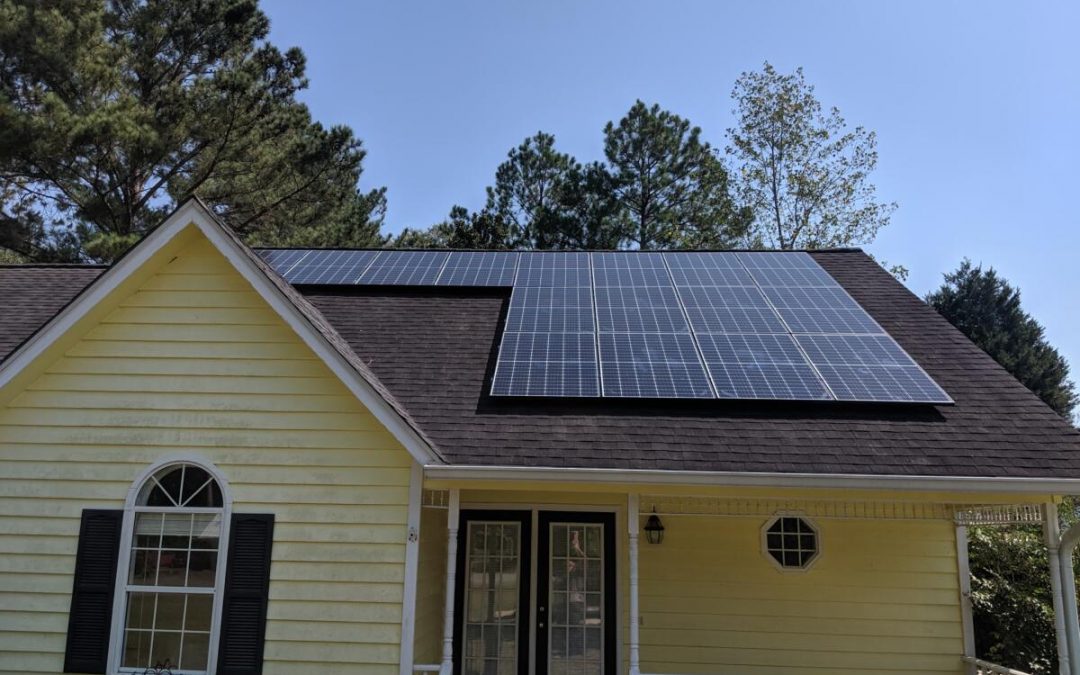
Can I sell my home if I have solar panels?

Before, you put your home on the market to sell. You may want to educate yourself with this article if you have or are considering placing solar panels on your home. Thank you, Joel Gerber with the Brannen, Searcy, and Smith law firm in Savannah, GA. for providing this valuable information.

While there is plenty of information out there on the benefits of installing a solar panel system on a home, there isn’t much guidance when it comes to selling a property with solar panels. I have had a lot of questions recently regarding this issue. This article will address (1) what usually occurs on the public record when solar panels are financed, (2) the options a buyer and seller have at closing when financed solar panels are involved and (3) contract provisions that should be included when negotiating the sale of a home with a financed solar panel system.

Solar Panel Systems and the Public Record:

Anytime you are listing a home that includes solar panels, you must ask the seller if the system is or was financed. If they didn’t finance it, then nothing further needs to be addressed. If the seller financed it, please keep reading.

When an owner finances solar panels, the finance company usually records a document called a UCC financing statement on the public record. A UCC financing statement is similar to a security deed that is recorded when a buyer obtains a loan to purchase a home. Like a security deed, the UCC financing statement must be cancelled on the public record once it is paid off.

It is critical that you inform the closing attorney if a solar panel system is or was financed (even if your client says that is has been paid in full). While a finance company generally records a UCC financing statement, sometimes they do not. Without a UCC recorded on the public record, the closing attorney will have no knowledge that there are financed solar panels on the home. You want to make sure the closing attorney has plenty of time to work with the seller and the finance company to ensure that a payoff is timely received.

Oftentimes we are informed that a solar panel system has been paid in full, but the UCC was never cancelled of record by the finance company. Until the cancellation is recorded, it creates a title issue and the home cannot be sold. Again, you want to make sure the closing attorney is made aware of the prior financing as soon as possible to allow them enough time to obtain a cancellation of the UCC.

Options at Closing When Solar Panels are Involved: 

There are three options when addressing a solar panel system that is being financed. The first is for the seller to pay it off at closing. The closing attorney will order a payoff just like they do with a mortgage and collect the payoff amount at closing. Second, the buyer and seller can agree to split the payoff amount at closing. The last option and most complicated is for the buyer to assume the seller’s existing solar panel loan. While this may sound like the easiest option, I have only seen the successful assumption of a solar panel loan a few times.

If your client is open to assuming the existing seller’s solar panel loan, the first step is to ask the buyer’s mortgage lender whether that is even an option in light of the home mortgage loan. For many individuals, obtaining a mortgage for a home purchase and assuming a secondary loan for a solar panel system is not possible. The additional debt the buyer proposes to assume relating to the solar panels will disqualify them from the home mortgage.

Even If the mortgage lender states that the buyer is in a position to assume the solar panel loan, the buyer has to qualify with the solar panel finance company to assume the same. I have seen a number of individuals who simply could not qualify for the solar panel assumption even though the mortgage lender said it would not affect the home mortgage.

Contract Provision Relating to Financed Solar Panels:

So usually I provide great sample stipulations to help guide you through the issues I write about. Solar panels are a little different because there are numerous scenarios.

The first one is easy if the seller will be paying off the solar panel loan at closing (I don’t even think you need a sample on that one).

If the buyer and seller agree to split the payoff you want to make sure the contract provision is very clear. It may be as simple as the buyer and seller agree to evenly split the solar panel payoff at closing. Or maybe it would say the buyer shall pay a certain dollar amount towards the seller’s payoff of the solar panel system loan at closing and the seller shall pay the remaining balance.

The scenario that can get a lot more complicated is when the buyer agrees to assume the seller’s solar panel loan, but later finds out they can’t qualify for the assumption. My best advice is to address that issue with the listing agent upfront. The parties will need a plan B so if the buyer is not able to qualify for the assumption (even if the buyer’s lender approved it), the parties are not scrambling to keep the transaction together.

Water Filtration Systems, HVAC Systems and Alarm Systems:

A few of the other common items I see homeowners finance are water filtration systems, HVAC systems and alarm systems. Sometimes we learn of these loans because the finance company filed a UCC on the public record. Other times we are told about them by the seller when we ask. When you are working with your seller and any of these items are in the home please make sure you ask if they are financed. If they are please make sure you alert the closing attorney as soon as possible to ensure a smooth transaction.

CAUTION: I recently had a situation where a seller signed a financing agreement for solar panels on her home. Shortly after the loan was signed, she listed her home for sale. She was under contract the next day. When we reached out to the solar panel finance company they told us that they could not send us a payoff for 35 days due to a rule that the seller had a recission period to cancel the loan. If we waited that long to receive the payoff we would have missed the closing date. After researching the issue the seller decided to rescind the loan and we were able to get a payoff and paid it off at closing.

Uncategorized • June 14, 2026

Help! What do I do? I don’t understand everything about mobile home transfers

This article is to help those that are considering selling a mobile home and what to know before listing it for sale. Thank you, to Joel Gerber with the attorney office of Brannen, Searcy, and Smith of Savannah, GA. for providing this valuable information.

The Basics:

Initially, mobile homes, like cars, are personal property (rather than real property such as land) and have state-issued titles. A mobile home title is a legal document that proves ownership of the home. When we discuss mobile home titles in this article it is different than when we refer to titles relating to real estate. Single-wide mobile homes will have one title and double-wide mobile homes generally have two. For double-wide mobile homes, each title will include the same vehicle identification number (VIN), but one will end in A and one will end in B.

When a mobile home is being transferred (and not in connection with a real estate closing), the titles are transferred by the buyer and seller signing the back of the titles to transfer the same. Then the buyer takes the mobile home title to the tax commissioner’s office (in the county where the mobile home will be placed) with a MV-1 Motor vehicle title application and the state will process the transfer and issue new mobile home titles in the buyer’s name. While that sounds super easy, and it is, the transfer of mobile home titles when connected to a real estate closing can get much more complicated.

While not required under VA, FHA, USDA or conventional loan financing, a majority of lenders will not close a loan in connection with a mobile home UNLESS the mobile home titles have been retired. What does that mean? “Retirement” means all original titles are surrendered to the county tax commissioner and a T-234 (also known as a Mobile-Manufactured Home Certificate of Permanent Placement) is recorded on the public record for each title issued for a specific mobile home. A mobile home is converted from personal property to real property once the retirement process is complete. Going forward, the property will only receive one property tax bill and not a separate mobile home bill. You may also hear this process known as the surrendering of titles.

Retirement of Mobile Home Titles:

Generally, mobile home titles can only be retired when the seller has the original mobile home titles in his or her possession. The following will discuss the process of retirement of mobile home titles after a contract has been provided to the closing attorney and it is determined that the lender will require the mobile home titles to be retired PRIOR to closing.

First, the seller will need to provide copies of the front and back of the titles to the closing attorney so that the closing attorney can prepare a T-234 for each mobile home title. A T-234 is the legal document recorded on the public record that converts a mobile home from personal property to real property. Once the T-234s are prepared, the seller must bring the original mobile home titles to the closing attorney and sign the T-234s.

Second, the closing attorney will e-record the signed T-234s in the real estate records.

PLEASE NOTE: Chatham County’s process for this step is different than most counties in the area. For mobile homes in Chatham County, the T-234s CANNOT be e-recorded and the seller MUST go to the Chatham County Superior Court Clerk’s office in Savannah to be recorded. *** See the last paragraph of this section.

Third, once recorded, the closing attorney will email a copy of the recorded T-234s to the seller. The seller must then take the recorded T-234s to the clerk of superior court real estate division in the subject county and have the clerk certify the copy.

Last, the seller must then go to the county tax commissioner’s office with the certified copy of the T-234s and the original mobile home titles to retire the titles. Once the tax commissioner has retired the titles, they should give the seller confirmation that the titles were retired. The confirmation is by a document called “Title Cancelled to Real Property” and the closing attorney will need a copy of the confirmation for their file.

*** Chatham County Title Retirement Process ***

The seller takes the signed T-234s and the original mobile home titles to the Chatham County Superior Court Clerk’s office in Savannah to be recorded. The clerk should let the seller wait while they record them. The seller should ask the clerk to give them a certified copy of both T-234s. Then, the seller takes the certified copies of the recorded T-234s and the mobile home titles to the Chatham County Tax Commissioner’s office to surrender the titles. If the Tax Commissioner needs to keep the certified copies of the T-234s, please have the seller obtain the deed book and page number for each so the seller can email that information to the closing attorney. Once the Tax Commissioner has retired the titles, the seller should obtain confirmation that the titles were retired. The confirmation is by a document called “Title Cancelled to Real Property” and the closing attorney will need a copy of the confirmation for the file.

Mobile Home Titles and Closings:

Cash Closing: Assuming the mobile home titles have not been retired, the seller should send copies of the front and back of the mobile home titles to the closing attorney so the attorney can confirm (a) the owner of the mobile home matches the owner of the real property being sold, (b) that there are no lien holders listed on the titles and (c) that there are no signatures on the back of the mobile home titles. Assuming everything is in order, the seller will bring the original mobile home titles to closing and the buyer and seller will sign the back of the titles to transfer the same. Then the buyer will take the mobile home title to the tax commissioner’s office (in the county where the land and mobile home are located) with an MV-1 Motor vehicle title application. Then, the state will process the transfer and issue new mobile home titles in the buyer’s name.

SUPER IMPORTANT: There are instances, even in a cash transaction, where the seller will need to retire the mobile home titles prior to closing. This will be required when a buyer cannot transfer the mobile home titles into his or her name. A few common examples where this scenario will occur are when the buyer is not a US citizen or in certain counties, the buyer does not have a Georgia driver’s license. The closing attorney should be monitoring this situation to be able to provide guidance to the parties if the mobile home titles need to be retired in a cash closing.

Financed Closing:

If a lender requires that the mobile home titles be retired prior to closing, the steps are set forth above. If the seller has a mortgage associated with the mobile home titles, and the buyer’s lender will allow for the mobile homes titles to be retired in connection (but after) closing, the closing attorney will confirm with the seller’s lender that it does in fact have the original titles in its possession. The closing attorney will then conduct the closing like any other, but will have both the buyer and seller sign a mobile home- specific power of attorney so that the closing attorney can complete the retirement process post-closing. Once the seller’s mortgage has been paid in full, the seller’s lender will release the mobile home titles. In a perfect world, the mobile home titles are then sent from the State to the closing attorney and the closing attorney uses the power of attorneys to complete the retirement process.